
Jane VI: The Story of a P-51 Mustang and the Colonel Who Flew Her
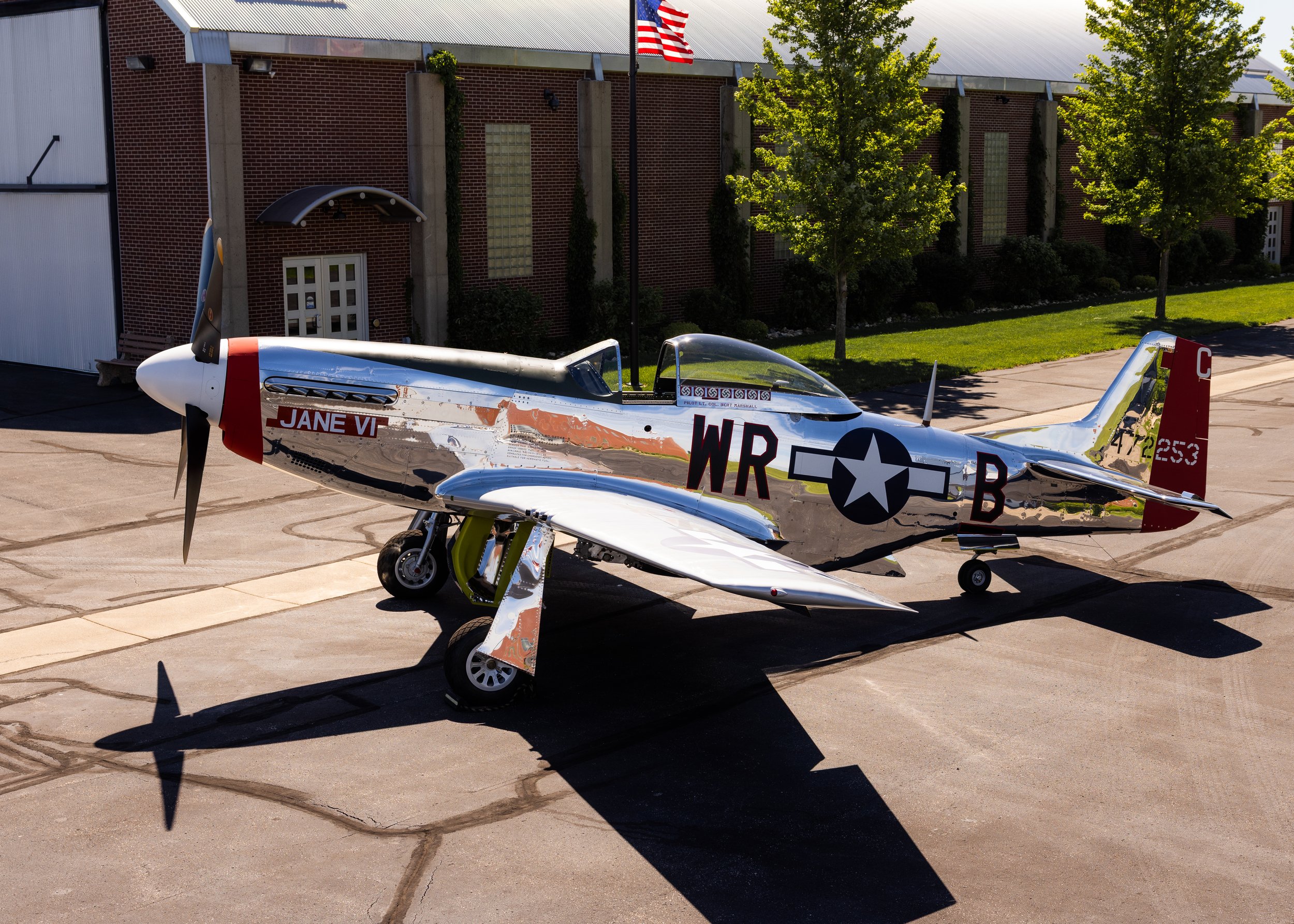
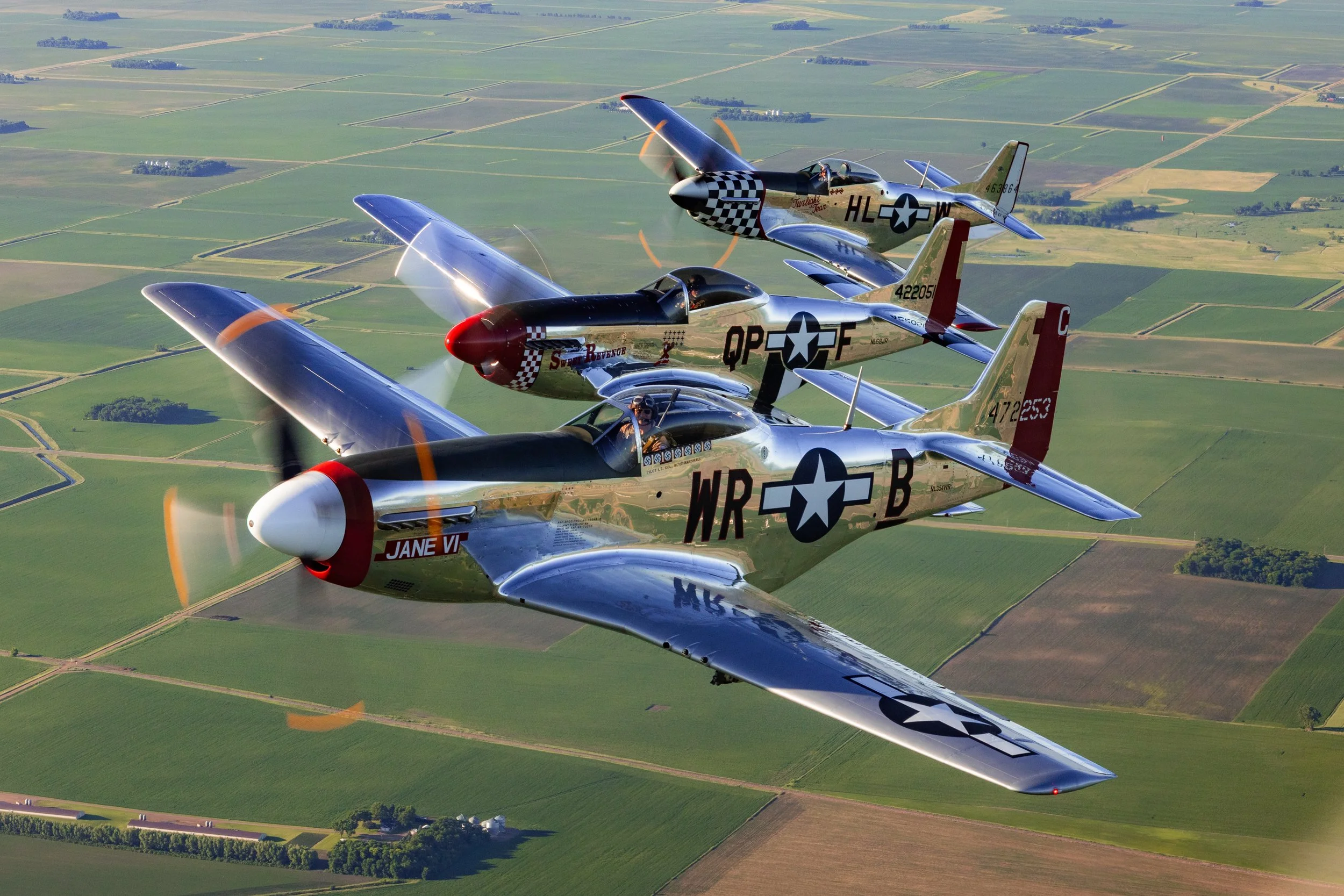
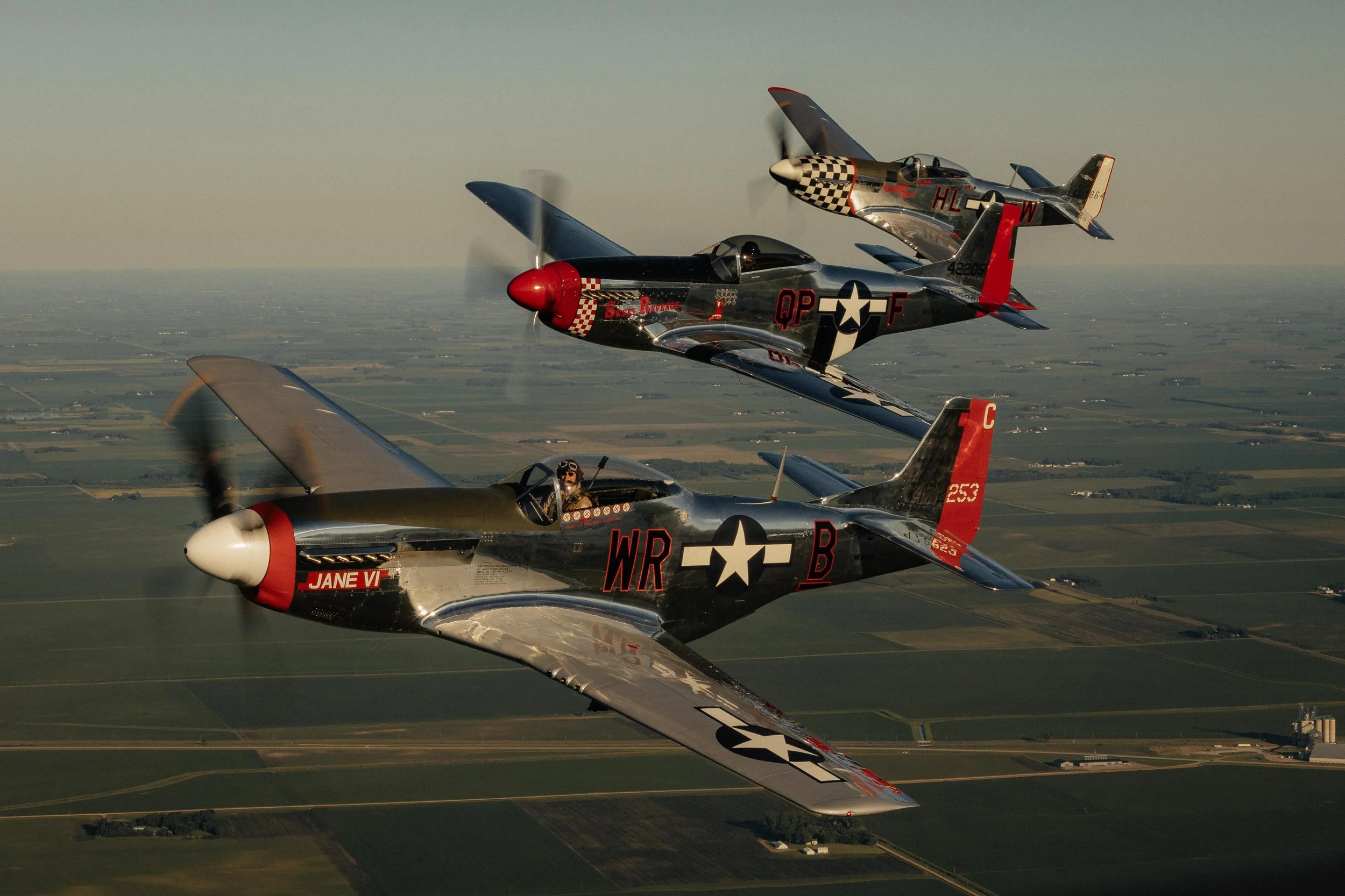
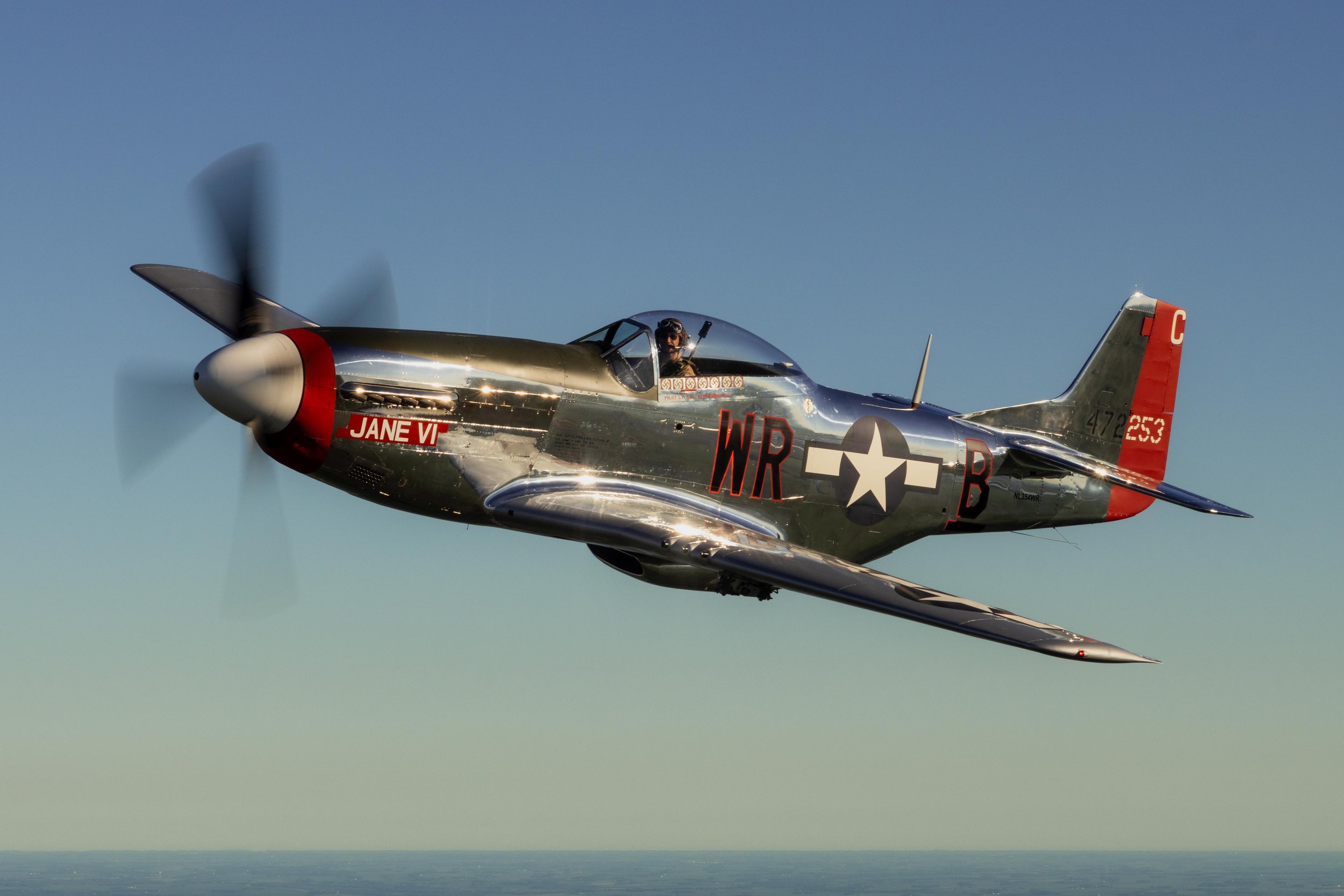
In the last chaotic, high-stakes months of the air war over Europe, a single North American P-51D-20-NA Mustang — serial number 44-72253 — carried a lieutenant colonel through some of the most dramatic missions of the 355th Fighter Group's war. Her name was Jane VI, and her story is really two stories in one: the story of a machine, and the story of the man who trusted his life to her.
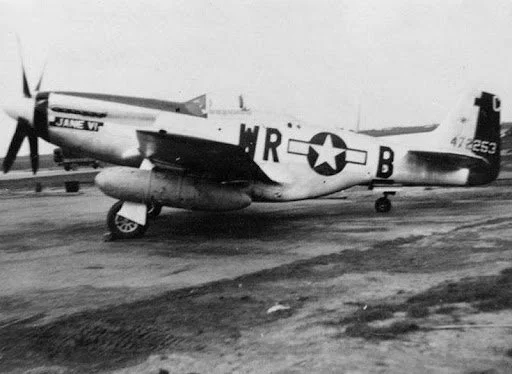
Jane VI at Steeple Morden Field in 1945
Born for War
Jane VI rolled off the North American Aviation line and was completed and delivered to the Army Air Forces Materiel Command on January 9, 1945 — with only a few months of war left to fight, though nobody flying her yet knew that. Two weeks later, on January 23, she arrived at BAD2 Warton in England, where American aircraft were modified and prepped for combat in the European Theater of Operations.
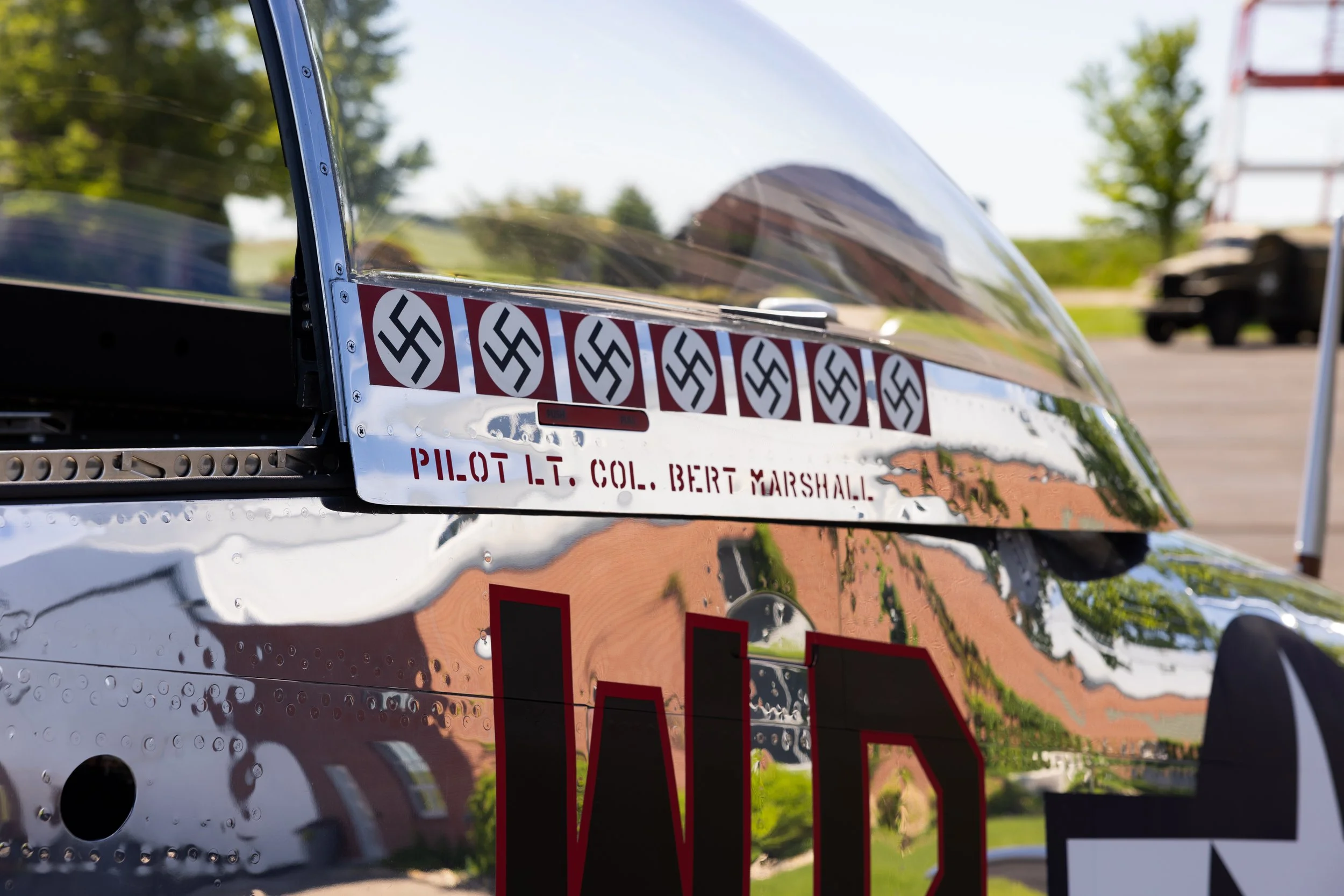
By January 27, 1945, she had been ferried to the 355th Fighter Group at Steeple Morden airfield, designated F-122. On January 30, ground crews painted her fuselage code: WR-B. For a few weeks, she was simply "No Name" — a fresh airframe waiting for a pilot to claim her.
That wait ended on February 17, 1945, when she was formally assigned to Lieutenant Colonel Bert Wilder Marshall, Jr., who christened her Jane VI — continuing a line of aircraft he had named after the same person through multiple combat tours.
The Pilot Behind the Name
Bert Marshall was no rookie. He'd already completed one full combat tour with the 355th beginning in June 1944. In February 1945, he returned to the group along with newly arrived Group Commander Lieutenant Colonel Claiborne "Kin" Kinnard — Marshall reportedly turned down the chance to command an entirely different fighter group just so he could come back to the 355th.
Before either man could fly combat again, Army Air Forces regulations required a mandatory 15-hour refresher for anyone returning from leave. Kinnard, characteristically confident, declared both himself and Marshall "ready" after just 5 hours in the air. Those refresher hops — flown February 20, 21, and 24 — were Jane VI's very first flights with her new pilot, each logged simply as "Local."
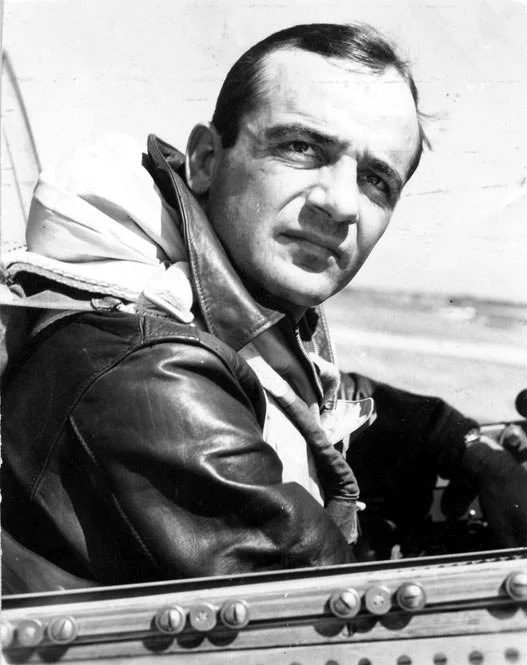
Lt. Col. Marshall and “JANE VI” flew around 60 hours of combat together. From escorting B-17s into the heart of Nazi Germany, to strafing targets of opportunity.
Into Combat
Jane VI's first real combat mission came on February 26, 1945 — a brutal, six-hour ramrod escort to Berlin. Kinnard led the 357th Fighter Squadron that day with Marshall flying his wing, the two men making their return to combat together after their long stretch away from the group.
From there, Jane VI carried Marshall across the skies of Germany at a punishing pace:
February 27 – A four-hour escort mission to Halle, where the group destroyed a Do 217 and became the 355th's seventeenth confirmed aerial victory.
March 1 – A dramatic 6.3-hour mission to Ingolstadt. While Marshall's formation swept in on the deck to destroy trains and flak towers, another element of the group tangled with Me 262 jets, downing two and damaging three — a startling total against the Luftwaffe's most advanced fighter.
March 12 – Marshall led the entire B Group to the port at Swinemunde, flying a careful six-hour mission just twelve miles from advancing Soviet forces.
March 15 – Another six-hour haul, this time escorting bombers to Oranienburg near Berlin, where Me 163 rocket-powered fighters made a brief, unsuccessful pass at the formation.
March 21 – A rare double: Marshall led two separate missions in one day, capped by a three-hour ramrod to Mülheim.
March 22 – Perhaps Jane VI's most violent day yet. Marshall led the entire A Group down to strafe airfields at Kitzingen, Memmingen, and Würzburg, destroying twelve German aircraft — including Me 262 jets — and damaging ten more.
March 26 – A grueling instrument mission to Merseburg, flown almost entirely blind through terrible weather.
By early April, Jane VI had carried Marshall through some of the most intense escort and strafing missions the 355th flew that spring, including a six-hour trip to Kiel on April 3 (though on that particular day, Marshall actually flew a different aircraft, coded WR-M, while Jane VI sat in the hangar receiving a new engine).
The Day Husum Burned
If Jane VI had one defining moment, it came on April 13, 1945.
Leading the 354th Fighter Squadron on an escort mission toward Hagenau, Marshall spotted something extraordinary as the formation crossed near Husum: more than fifty German aircraft parked on the airfield below. After the bombers dropped their loads, Marshall broke off and led his squadron back to Husum for a low-level strafing run.
It was a massacre of parked aircraft. Marshall's Red Flight knocked out the airfield's flak positions on the first pass, clearing the way for seven strafing runs across the field. When the smoke cleared, the 354th Squadron had claimed 37 enemy aircraft destroyed and 17 damaged — the single highest total ever recorded by one squadron in the 355th Fighter Group's entire war, and remarkably, without losing a single pilot.
Marshall himself personally destroyed two unidentified twin-engine aircraft, a Bf 109, and an FW 190, plus damaged two more twin-engine planes on the ground at Husum. These were the only ground victories ever credited to Bert Marshall — and the only aerial combat scores ever recorded by Jane VI herself.
It was also her last mission wearing that name. The strafing runs came at a cost: Jane VI picked up battle damage over Husum. She went into the repair shop and came out re-coded WR-L, no longer Marshall's personal mount. He moved on to a new aircraft, 44-72953, which he named Jane VII and flew for the remainder of the war.
A Second Life as WR-L
Jane VI didn't retire — she just changed pilots. Under her new code, Flight Officer Hixon flew her on several of the final missions of the war in Europe:
April 16 – A grueling 6.2-hour fighter sweep to Traunstein and Eger, during which her rudder and stabilizer took a hit from a 40mm shell, yet she made it home safely.
April 20 – A 7-hour fighter sweep all the way to Prague.
April 21 – A 4-hour sweep back to Würzburg — notably, the only mission where the former Jane VI (now WR-L) and the new Jane VII flew together.
April 25 – A 6.2-hour escort to Hallein, which turned out to be the very last combat mission the 355th Fighter Group flew in World War II.
Four days later, on April 29, the war in Europe ended. The aircraft that had once been Jane VI had flown her pilots all the way to the finish line.
One Last Flight
The story doesn't quite end with victory in Europe. On June 2, 1945, weeks after the shooting had stopped, 44-72253 — still coded WR-L — was involved in a mid-air collision during a photo flight with another 355th Mustang, WR-K, flown by Lieutenant James Jabara (who would later become America's first jet ace in Korea). Both pilots bailed out safely.
It was an unglamorous, almost accidental ending for an aircraft that had survived flak over Berlin, strafing runs at Kitzingen, and the guns of Husum airfield — but both men walked away, which was more than could be said for many Mustangs and pilots lost that same spring.
Below is actual footage from that photoshoot — moments before the accident.
The Restoration: Back From the Wreckage
For decades after that June 1945 mid-air collision, Jane VI existed only as scattered wreckage and a name in the history books. Parts of the aircraft were eventually recovered in 1986, and the long road back to the sky began years later when the project passed through the hands of several restorers, who rebuilt the wings, a partial fuselage, the landing gear, and the vertical and horizontal stabilizers.
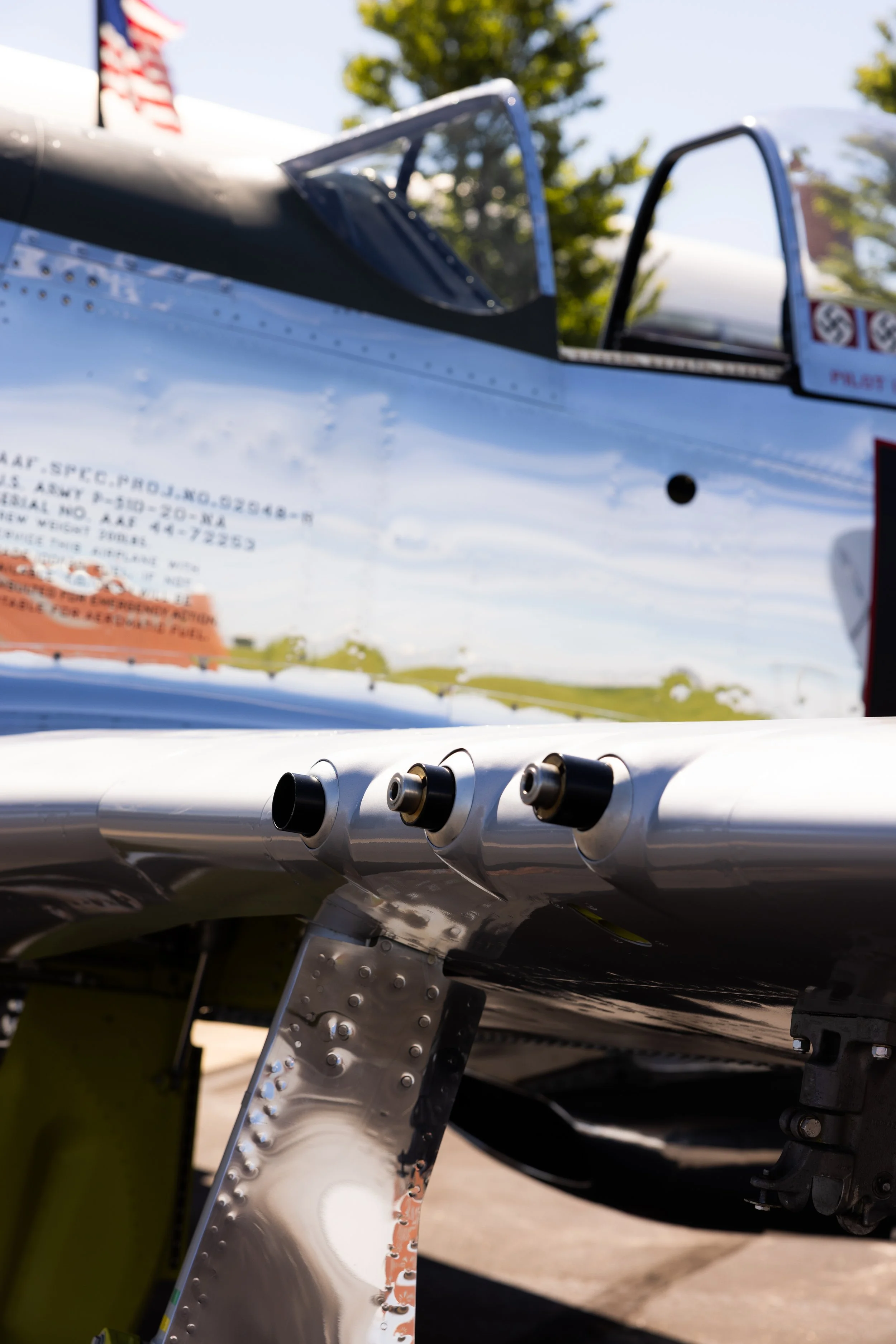
In 2021, we acquired Jane VI here at Fagen Fighters to complete the restoration, hauling the components more than a thousand miles to our museum in Granite Falls, Minnesota. In 2023 Sebastein Domine purchased the project and over the last two years, our team has carried this project the rest of the way home — turning boxed-up components into a complete, airworthy P-51D Mustang once again. In March of this year, we watched Jane VI take to the sky for the first time since the war, a moment nearly 80 years in the making, and honestly one of the proudest we've had on this project.
This restoration has meant more to us than rivets and sheet metal. Owner, Sebastein has stayed connected with Bert Marshall's own family throughout the process, and we've treated Jane VI's rebuild as a tribute to the pilot who flew her through some of the fiercest combat of the war's final months — and to the only ground victories he ever claimed.
Come See Jane VI in Person — Next Week at EAA AirVenture
Here's the exciting part: we're bringing Jane VI to her public debut — the first time she's been seen by the public since World War II — at EAA AirVenture Oshkosh, next week.
We're bringing her to Warbird Alley, and she'll be on display all week. Find us right on the corner of Warbird Alley — our crew will be on-site the throughout the week, and we'd love for you to stop by, say hello, and hear more of her story in person.
For an even closer look at her history, join us for Warbirds in Review on Wednesday at 10:00 a.m., where we'll be featuring Jane VI and telling her story in full, decades after she last flew combat over Germany. On the panel will be the owner, Sebastein Domine, Bert Marshall’s son, Bill Marshall, and our team members, Evan Fagen and Brandon Deuel.
If you've read this far, you already know there's a lot more to this story than a coat of paint and a fresh engine. Come see her with us.
![354 Bert Marshall with 1st DFC_jun1944 [marshall].jpg](https://images.squarespace-cdn.com/content/v1/6155008328aea95bfc4865dd/1784054805277-S3WFUIPE7RJNF55WQDB8/354+Bert+Marshall+with+1st+DFC_jun1944+%5Bmarshall%5D.jpg)